A guide to staying near gorilla permit office starts with one useful clarification: for gorilla trekking in Rwanda, your permit is normally arranged in advance, while the Volcanoes National Park headquarters in Kinigi is where trek day begins. This is the place for the early-morning briefing, group allocation, ranger guidance, and the excited first moments of a day many travelers have planned for years.
Choosing a stay nearby is less about checking a box on a map and more about protecting the quality of that morning. You want enough time to wake slowly, eat well, gather your layers, and arrive composed. In the Virunga foothills, that calm can make a real difference.
Why stay close to the gorilla trekking briefing point?
Most gorilla trekking guests need to reach the park headquarters early in the morning. The exact reporting time can vary, so confirm it with your trekking arrangements, but there is rarely a benefit to beginning the day with a long road transfer. Staying near Kinigi keeps the logistics simple and gives you a better margin for changing weather, packing checks, and a relaxed breakfast.
The practical advantage is especially clear after a long international journey or a drive from Kigali. Rather than arriving late, sleeping briefly, and rushing out before dawn, you can settle into the volcanic landscape the day before your trek. Gardens, mountain air, and a proper meal are not luxuries when you have an active day ahead. They are part of arriving ready.
Proximity also makes it easier to respond if plans shift. Treks happen in a living forest, and group assignments, weather, and personal pace all deserve flexibility. A nearby base gives you the comfort of returning quickly after your hike, whether you want a hot shower, a quiet rest, lunch, or time to share the day’s photographs.
What “near” should mean for your stay
Do not choose accommodation on distance alone. A property may look close online but still involve an awkward road, a noisy setting, or an early departure that defeats the purpose. Ask how long the actual drive takes to the Volcanoes National Park headquarters in the morning, not simply how many miles separate the two places.
For most travelers, a short and reliable transfer is the sweet spot. It leaves room for a hearty breakfast and avoids the stress of leaving in the dark unnecessarily early. Staying in or around Kinigi also places you in the heart of the trekking area, rather than treating the park as a day trip from farther away.
There is a trade-off. The closest lodging may be more secluded, while accommodations farther toward Musanze town can offer easier access to additional shops and a wider range of evening activity. If gorilla trekking is the centerpiece of your visit, choose trek-day ease. If you are spending several days exploring Northern Rwanda, balance park access with the experiences you want before and after the trek.
Look for comfort that helps you recover
Gorilla trekking can involve mud, rain, steep ground, and several hours on foot. It can also be gentler than expected, depending on the gorilla family’s location that day. Because no one can predict your exact route in advance, choose a place that supports both possibilities.
A comfortable bed, warm water, satisfying food, reliable Wi-Fi, and a peaceful place to sit matter more than an elaborate room category. If you are traveling as a couple, family, or small group, check whether the property has the right format for you. An apartment or guest house can make sense for guests who value shared space, while an adventure tent may suit travelers looking for a closer-to-nature experience.
Also consider the small details. Can breakfast be prepared early? Is there secure parking if you have a driver? Can the team help organize a transfer, recommend a porter, or arrange dinner after your trek? Thoughtful hospitality removes friction from a day that should feel extraordinary, not overplanned.
Plan the night before your gorilla trek
The best trek mornings are often prepared the evening before. Lay out your clothing, charge your camera and phone, and keep your passport and permit details where you can find them easily. Your trekking operator or the park team will confirm what you need, but it is wise to travel with your identification and any documentation requested for the briefing.
Dress for changing conditions rather than for the weather you see from your window. Volcanoes National Park is lush for a reason. A light rain jacket, long pants, sturdy hiking shoes, and socks you do not mind getting muddy are sensible choices. Pack water, sun protection, and a small daypack. Gardening or trekking gloves can be useful when vegetation is thick, and gaiters are worth considering during wetter periods.
Porters are available at the park and can be a valuable part of the experience. They help carry daypacks and offer steady support on uneven terrain. Hiring one is not only practical; it also contributes directly to local livelihoods. For many travelers, it is a simple way to make the day more comfortable while sharing the value of tourism locally.
Avoid treating the evening as a race to fit in every possible activity. A relaxed dinner, hydration, and sleep will serve you better than a late night. If you have time, enjoy the mountain views and let the anticipation build naturally.
A guide to staying near gorilla permit office: booking wisely
Gorilla permits are limited, so reserve your trekking date before finalizing nonrefundable travel plans. Once your permit is confirmed, book your accommodation for at least the night before the trek. Many guests also choose to stay the night afterward. That second night is a wise choice if you do not want to face a long transfer while tired, muddy, and still processing what you have just seen.
When comparing stays, ask direct questions: How close are you to the park headquarters? What time can breakfast be served? Is dinner available on site? Can you arrange local transport? What happens if our trekking schedule changes? Clear answers are often more valuable than glossy promises.
Travelers who care about where their money goes can also look beyond location and price. A stay that employs locally, buys thoughtfully, reduces waste, and reinvests in community programs adds another dimension to a gorilla trekking trip. The wildlife encounter is unforgettable, but responsible travel should also leave value with the people who call this region home.
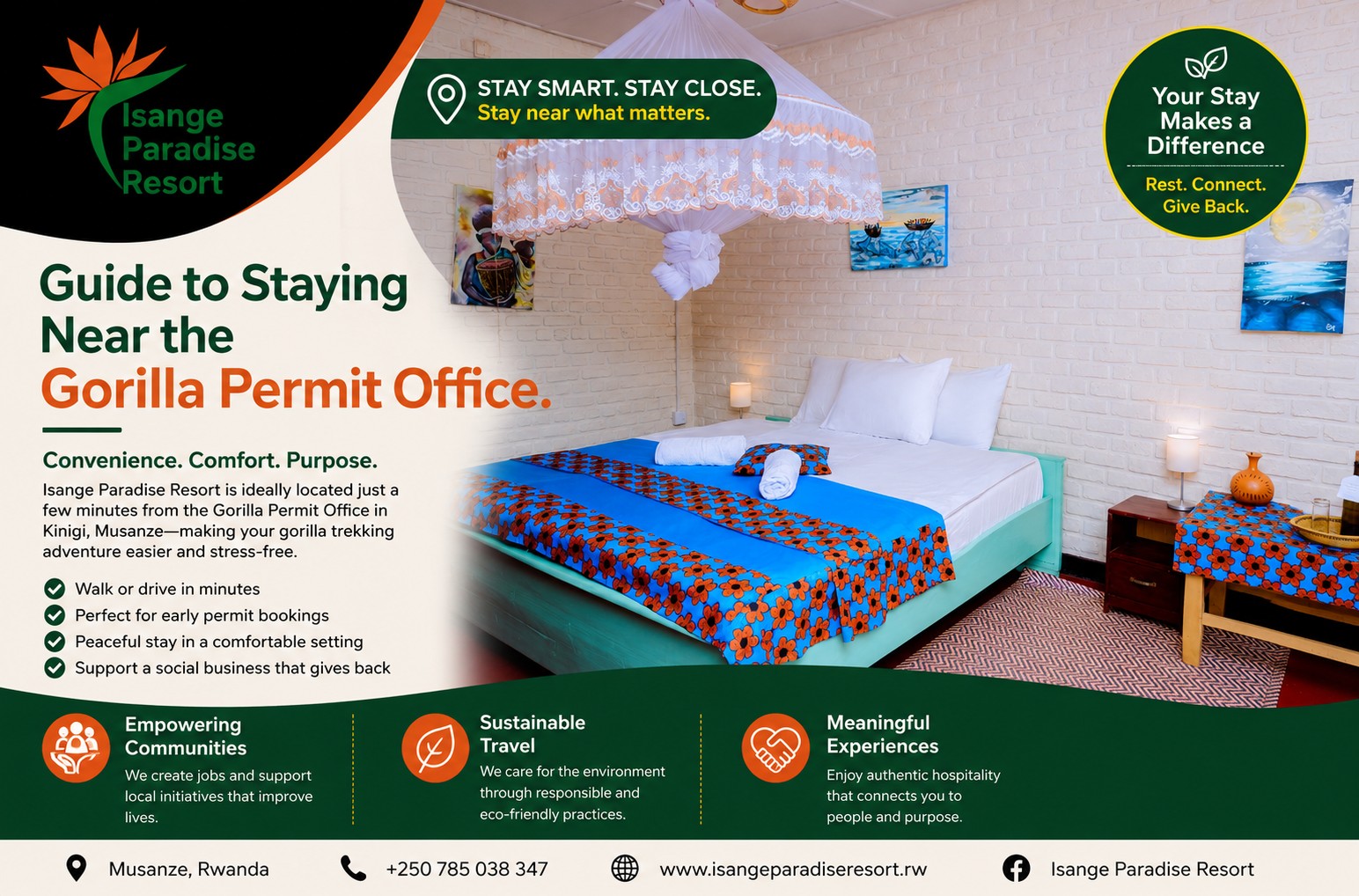
At Isange Paradise Resort, guests can stay with purpose near the Volcanoes National Park experience, with hospitality shaped around comfort, nature, and community impact. As a social business, the resort reinvests its profits into education, health, and local initiatives through Future 4 Kids. It is a meaningful option for travelers who want their accommodation choice to extend beyond a single night’s stay.
Give yourself time beyond the trek
Gorilla trekking deserves more than a rushed overnight stop. Add a buffer day if your schedule allows. You may want to visit local communities, join a golden monkey trek, enjoy a coffee, cycle through the countryside, or simply rest among the gardens after an emotional and physical day.
A slower itinerary is also kinder to the destination. It gives you time to spend with local businesses, appreciate the landscape, and travel at a pace that feels respectful rather than extractive. Rwanda’s northern region rewards travelers who leave room for the unexpected: a clearing in the clouds, a conversation over a meal, or a quiet view of the volcanoes before breakfast.
Book close enough to begin trek day calmly, choose a stay that genuinely restores you, and leave room to experience more than the briefing point. The gorillas may be the reason you come, but a purposeful stay can become part of what you remember most.


Comments
Be the first to share your thoughts.
Leave a comment