
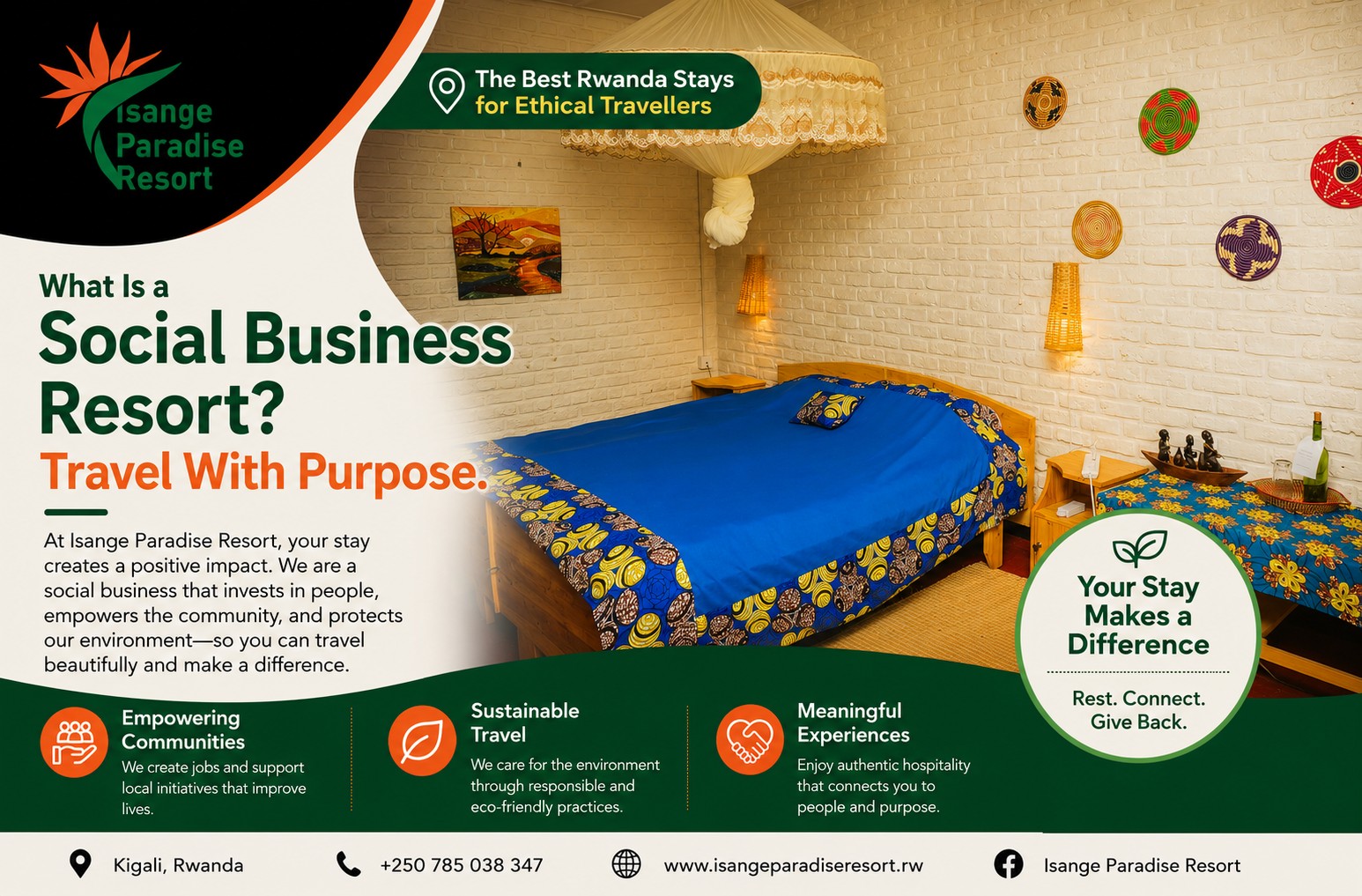
A gorilla trek may last a few extraordinary hours, but where you sleep, eat, and spend your travel budget shapes the impact of the whole trip. The best Rwanda stays for ethical travelers make that connection clear. They offer the comfort and reliable logistics you need while ensuring more of tourism’s value remains with Rwandan people, businesses, and communities.
For travelers heading to the Volcanoes National Park area, ethical accommodation is not about sacrificing a good night’s sleep or treating sustainability as a vague promise. It is about choosing a stay that respects local culture, creates fair work, reduces unnecessary waste, and gives guests a meaningful way to contribute.
What Makes a Rwanda Stay Truly Ethical?
A beautiful lodge with a reusable water bottle is not automatically an ethical stay. Environmental details matter, but the larger question is where the money goes and who benefits when a guest books a room, orders dinner, joins an activity, or buys a locally made gift.
Look first for transparency. A responsible property should be able to explain its community partnerships, local employment approach, sustainability practices, and the purpose behind its social initiatives. Broad claims such as “eco-friendly” or “community-focused” are less useful than specific examples: locally sourced food, staff development, support for schools or health programs, responsible waste management, or profits directed toward a defined community mission.
Local ownership and leadership also deserve attention. Internationally operated lodges can create jobs and purchase locally, so they should not be dismissed automatically. Still, a locally rooted business often has a more direct understanding of community needs and a stronger reason to keep tourism income circulating nearby.
Ethical travel also includes how guests behave. The most conscientious property cannot offset a visitor who disregards park rules, bargains aggressively with artisans, or treats people’s homes as photo opportunities. Choose a stay that encourages respectful travel, then bring the same care to every interaction beyond its gates.
Best Rwanda Stays for Ethical Travelers: What to Look For
The right choice depends on your itinerary, budget, and comfort expectations. Rwanda has accommodation ranging from simple guesthouses to high-end safari lodges, and a higher price does not always equal greater impact. A modest, well-run property with a visible local mission can be a more aligned choice than a luxurious stay with limited transparency.
A practical location that reduces travel strain
For gorilla trekking and golden monkey trekking, staying close to Volcanoes National Park can make an early start much easier. It also leaves more time to enjoy the surrounding countryside, a coffee stop, a cycling route, or an unhurried meal after a day outdoors.
Convenience has an ethical dimension, too. Fewer unnecessary transfers can mean less fuel use and more of your time, and spending remains in the local area. That said, travellers combining Kigali, Lake Kivu, Nyungwe, and the north may need to prioritise a route that works for the full trip rather than choosing every hotel solely by its green credentials.
Employment that has depth, not just appearance
Ask whether local people hold meaningful positions across hospitality, culinary, management, guiding support, maintenance, and administration. Fair employment includes training, dignified conditions, opportunity for advancement, and respect for the professional skill that local teams bring to a guest’s experience.
A good ethical stay does not present staff as part of the décor. It values them as hosts, professionals, and neighbors. You can often feel the difference in the welcome, in the knowledge shared at dinner, and in the pride people take in the property.
A clear community benefit
The strongest social enterprises make the connection between a reservation and community benefit easy to understand. Some donate a portion of revenue. Others fund projects through a foundation, work with cooperatives, sponsor education, or invest directly in health and livelihood programs.
Isange Paradise Resort offers one especially direct model for purpose-led travel: 100% of its profits are reinvested through Future 4 Kids into education, health, and community initiatives. For travelers seeking comfortable accommodation near the Volcanoes National Park area, that means a stay can support a mission beyond the room itself.
The details matter here. Community support should be shaped with local partners rather than imposed from outside. The most respectful programs listen to what communities identify as useful, whether that is school access, health services, skills development, or sustainable income opportunities.
Environmental practices that fit the place
Rwanda’s landscapes are a major reason people visit, from volcanic peaks and rainforest to rolling farmland and lakeshores. Responsible stays should protect those assets through sensible, ongoing practices rather than one-time marketing gestures.
Pay attention to water use, energy, waste separation, refill options, reduced single-use plastics, garden care, and purchasing choices. Small properties may not have the resources for every certification or solar installation, and that should not exclude them from consideration. Honest progress, locally appropriate solutions, and a willingness to improve are more meaningful than perfection claims.
Food is another useful signal. Menus that feature seasonal Rwandan ingredients and buy from local farmers can offer guests a more authentic meal while strengthening nearby supply chains. Imported items may still be necessary at times, particularly for dietary needs, but local sourcing should be more than a decorative line on a menu.
How to Book With More Confidence
Before reserving, spend a few minutes looking beyond room photos. Read how the property describes its impact, but also consider whether the information is concrete enough to trust. If you are booking directly, ask a short, respectful question about community programs or environmental practices. A responsible hotel should welcome genuine interest.
You can also check the basics that protect both your experience and the host business: cancellation terms, transport arrangements, meal options, accessibility, Wi-Fi expectations, and trek-day timing. Ethical travel works best when it is well planned. Arriving prepared prevents last-minute pressure on staff and helps you avoid expensive, unnecessary changes to your itinerary.
Direct booking can be valuable when a property offers a best-rate guarantee or clear savings for guests. It may reduce third-party commission costs and gives you a direct line for special requests, from dietary needs to airport transfers. However, compare terms carefully. If a trusted travel advisor provides better protections or coordinates a complex multi-stop itinerary, that service may be worth the difference.
Spend Beyond Your Room With Care
Your accommodation is only one part of the impact. Eat at locally owned restaurants when possible, buy crafts from makers or reputable cooperatives, and book experiences that pay guides fairly. When visiting community-based projects, follow the host’s lead and avoid framing every encounter as a charity visit.
For wildlife experiences, choose authorized operators and follow all ranger instructions. Keep a respectful distance, do not leave waste on trails, and remember that gorilla trekking fees support conservation and surrounding communities in important ways. The privilege of seeing wildlife depends on protecting the habitat and the people who live alongside it.
It is equally helpful to slow down. An extra afternoon in the north can create room for a garden meal, a conversation with a guide, a locally roasted coffee, or a visit to an artisan shop. Ethical travel is not measured by how many stops fit into a schedule. It is measured by the quality of attention and the fairness of the choices made along the way.
A Better Standard for Your Rwanda Stay
The best choice is rarely the one with the loudest sustainability language. It is the place that offers genuine hospitality, treats its team with respect, operates thoughtfully in a remarkable environment, and can show how guest spending supports a wider good.
As you plan your Rwanda journey, let comfort, location, and value guide you, but let purpose have a seat at the table as well. A carefully chosen stay can turn a memorable adventure into support that continues long after your return flight home.



Comments
Be the first to share your thoughts.
Leave a comment