A gorilla trek, a misty morning in Northern Rwanda, and a good meal in a garden can make a trip unforgettable. But for travelers who care where their money goes, one question adds real meaning to the itinerary: what is a social business resort? It is a place where your stay is designed to support more than your own comfort. Revenue from hospitality helps create lasting benefits for people in the surrounding community.
A social business resort still needs to deliver what every traveler expects: a restful bed, warm service, good food, reliable planning, and a setting worth traveling for. The difference is what happens after the business covers its costs. Rather than treating profit as the final destination, a social business reinvests it into a defined social mission.
For guests, that can turn a night’s accommodation into something more meaningful. You are not donating to an abstract cause after checkout. Your room, meal, event, or locally made purchase becomes part of a business model built to create opportunity.
What Is a Social Business Resort, Exactly?
A social business resort is a hospitality business that uses trading income to address social or environmental needs. It earns money through accommodation, dining, events, experiences, and related services, then directs profits back into its mission instead of distributing them primarily to private owners or shareholders.
The model matters because it is designed for continuity. Charitable support can be powerful, but donations may rise and fall. A well-run resort creates recurring income from travelers who need a place to stay, eat, gather, and rest. That income can help fund long-term work in areas such as education, health care, skills training, conservation, or family support.
This does not mean a social business resort is a charity with rooms. It is a real hospitality operation with standards to meet and guests to serve. It must manage reservations, employ staff, maintain facilities, source supplies, and earn enough to keep improving. Its social mission is strengthened by commercial discipline, not separated from it.
More Than a Hotel With a Donation Box
Many hotels support worthwhile causes. They may organize a cleanup, donate a portion of a campaign, or sponsor a local project. Those efforts can be valuable. A social business resort goes further by making impact part of its core operating model.
The distinction is simple: social responsibility is often an additional commitment a business chooses to make. A social business is built around the commitment from the beginning. Its profits have a planned purpose, and the guest experience is connected to that purpose every day.
That structure changes how a resort makes decisions. Hiring locally, purchasing from nearby producers, reducing waste, creating fair opportunities, and investing in community programs are not side projects for a brochure. They are part of how the business defines success.
For travelers, this can offer a more direct relationship with the destination. You are not only passing through Rwanda on the way to Volcanoes National Park. You are contributing to an economy that can help local families and community initiatives benefit from tourism, too.
How Your Stay Creates Impact
The precise impact depends on the resort’s mission and financial model. At a genuine social business resort, income from guests supports the day-to-day business first: staff wages, ingredients, maintenance, utilities, training, and quality improvements. Profits that remain are then reinvested into social programs or mission-led initiatives.
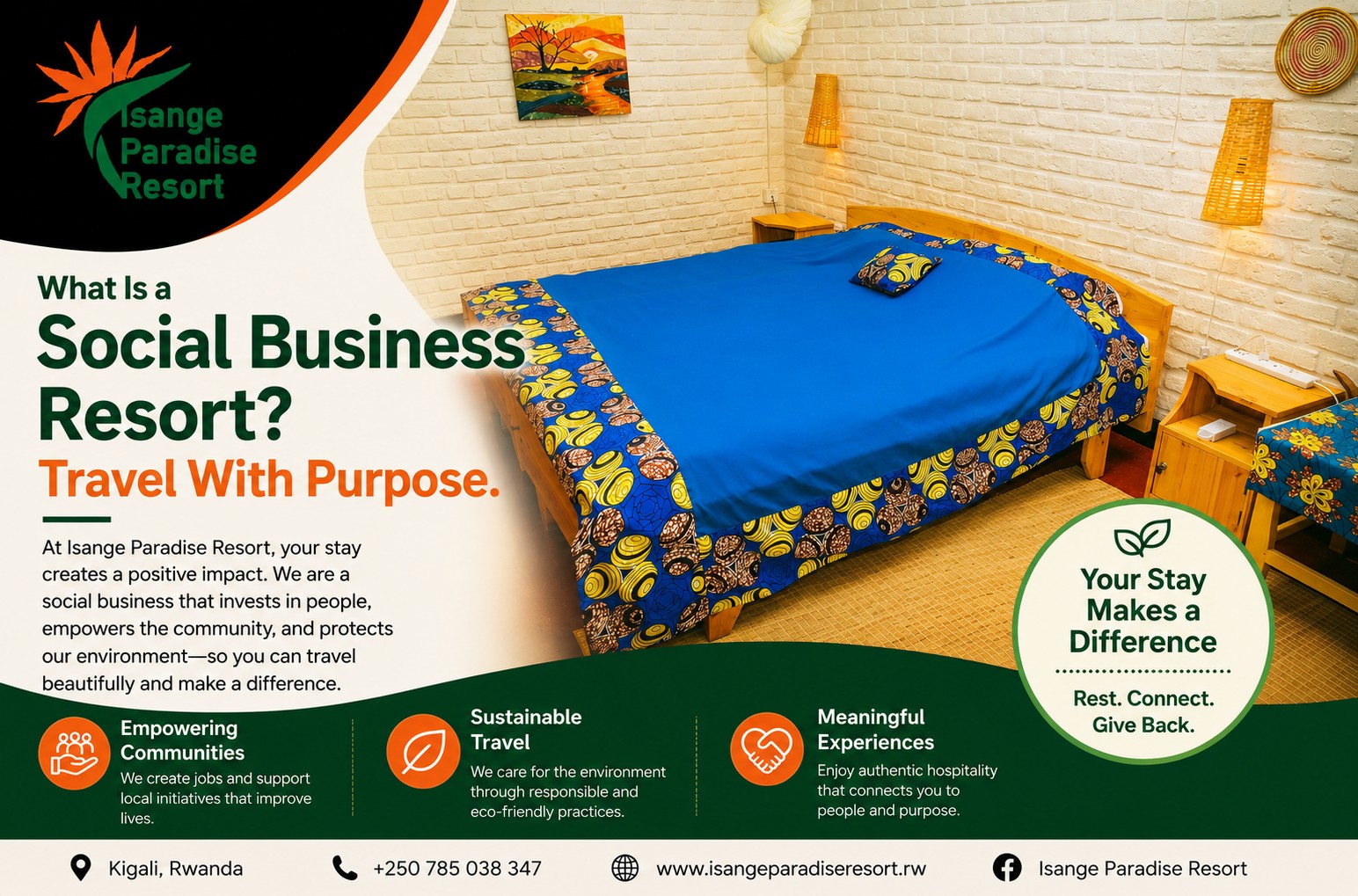
At Isange Paradise Resort, for example, 100% of profits are reinvested through Future 4 Kids to support education, health, and community initiatives. That means choosing a room, enjoying a meal, or hosting a small gathering can have value beyond the moment itself.
The impact may also happen closer to the guest experience. A resort can create jobs for local residents, buy vegetables and artisan goods locally, train young people in hospitality, and offer a dependable market for small suppliers. These choices keep more tourism spending circulating within the area.
Environmental care is often part of the picture as well. Resorts depend on healthy landscapes, clean water, and thriving communities. Practical measures such as mindful energy use, waste reduction, garden-based spaces, responsible sourcing, and respect for local culture help protect the qualities that bring visitors to the region in the first place.
What a Social Business Resort Should Still Deliver
Purpose does not replace comfort. Travelers planning an early wildlife trek or a full day of cycling need a property that makes the trip easier, not more complicated. The best social business resorts combine meaningful impact with the practical details that make a stay feel cared for.
Look for accommodation options that suit the way you travel, whether that is a private room for two, a family-friendly space, a guest house, an apartment, or a more adventurous tent stay. Helpful amenities matter, too: nourishing food, a welcoming bar or coffee stop, Wi-Fi, quiet gardens, massage, and spaces to unwind after an active day.
Location can be especially valuable around Volcanoes National Park. Being close enough to reach trek briefings without a stressful early-morning transfer gives you more time to rest, prepare, and enjoy the experience. For groups, an on-site venue for meetings, celebrations, or retreats can also simplify logistics.
A mission-led stay should never ask guests to lower their expectations. It should give them one more reason to feel good about where they book.
Questions Worth Asking Before You Book
The phrase “social impact” can mean different things across the travel industry. A few clear questions help you choose a stay whose claims are specific and credible:
- What social or environmental programs does the resort support?
- How are profits or a portion of revenue used after operating costs?
- Does the business employ locally and work with nearby suppliers?
- Can the resort explain its impact in clear, practical terms?
You do not need a lengthy annual report to make a thoughtful choice. Honest, specific answers are usually a good sign. A resort should be able to describe its mission without relying on vague promises about “giving back.”
It is also fair to ask what part of your spending makes the greatest difference. Sometimes direct booking helps a property retain more of the income from your reservation, leaving more capacity for staffing, service improvements, and community investment. Best rates and direct-booking benefits can be good for the guest and the mission when they are offered transparently.
Why This Model Fits Travel in Rwanda
Rwanda offers the kind of travel that stays with people: mountain landscapes, conservation experiences, rich coffee culture, generous hospitality, and encounters that invite visitors to pay attention. Gorilla trekking and golden monkey trekking bring international travelers to the north, while cycling, hiking, cultural experiences, and unhurried time in the countryside encourage them to stay longer.
Tourism can create significant opportunity, but its benefits are not automatic. A social business resort offers one practical way to connect visitor spending with community priorities. The traveler receives a comfortable, well-located base for adventure. The business earns income to operate responsibly. Local programs receive support through a model intended to continue over time.
There are trade-offs, of course. A smaller, purpose-driven property may not offer every feature of a large international hotel, and its availability may be more limited during busy trekking periods. In return, guests may find a more personal atmosphere, closer local connection, and a clearer understanding of what their stay supports.
Travel With Purpose, Without Making It Complicated
Choosing a social business resort does not require changing your whole trip. You can still plan the trek you have dreamed about, share a drink after a long day, sleep deeply, and enjoy the excitement of being close to extraordinary nature. The difference is that your booking carries an additional purpose.
For couples, families, solo travelers, and small groups, that can be a meaningful way to travel. You are choosing comfort and convenience, while also helping support work that matters beyond the resort gates.
When you are deciding where to stay in Northern Rwanda, look for a place that can explain both its hospitality and its impact with equal confidence. A good trip should leave you with vivid memories. A purposeful stay can also leave something positive behind.


Comments
Be the first to share your thoughts.
Leave a comment